17th-century immigrants
The Staten Island Years: Gideon’s Family in the New World, 1663–1685
Gideon Merlet and his family landed at New Amsterdam in February 1663, owing the West India Company for their passage. Over the next twenty years the colony changed hands three times, and the family took up land on the south side of Staten Island, and raised a new generation there, before the family moved on to New Jersey. This is what the surviving records say about those years.
The first year
A month after landing, on 19 March 1663, Gideon and six men from the same ship asked the colony’s council for land, seed grain and six months’ provisions, and the council gave its order the same day. On 1 April Gideon joined the Dutch Reformed Church in New Amsterdam with about nineteen others. (How the family got here, and what they owed for it, is told in The Company’s Offer.)
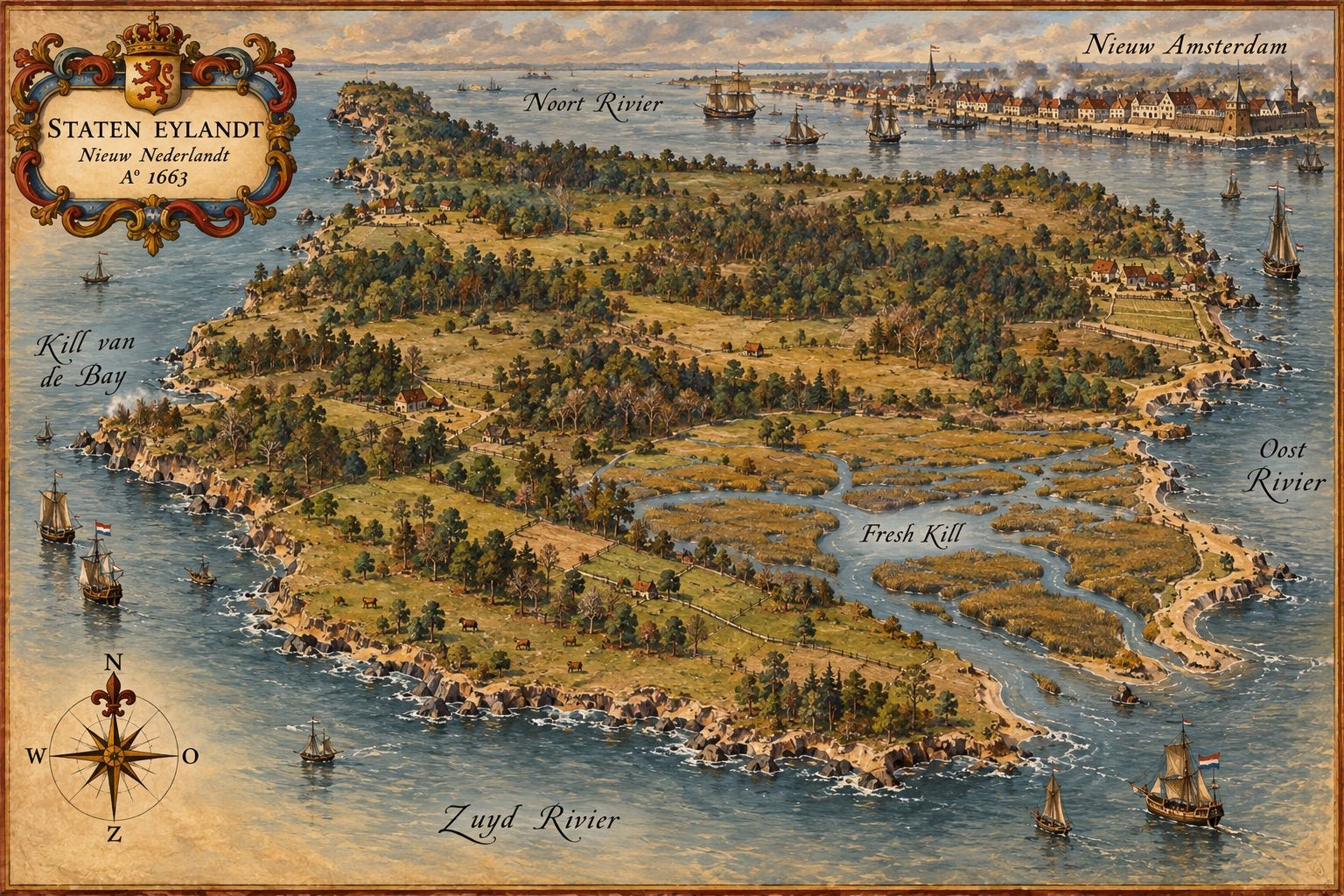
Where the family lived at first is not recorded. Staten Island had only just been settled for good: in 1661 a French-speaking Walloon, Pierre Billiou, and his companions had founded a village near the Narrows, later called Oude Dorp, the Old Town. The Merles, French-speaking Protestants like the Billious, were on the island within a few years, and the two families stayed close for a generation.
A change of flag, 1664
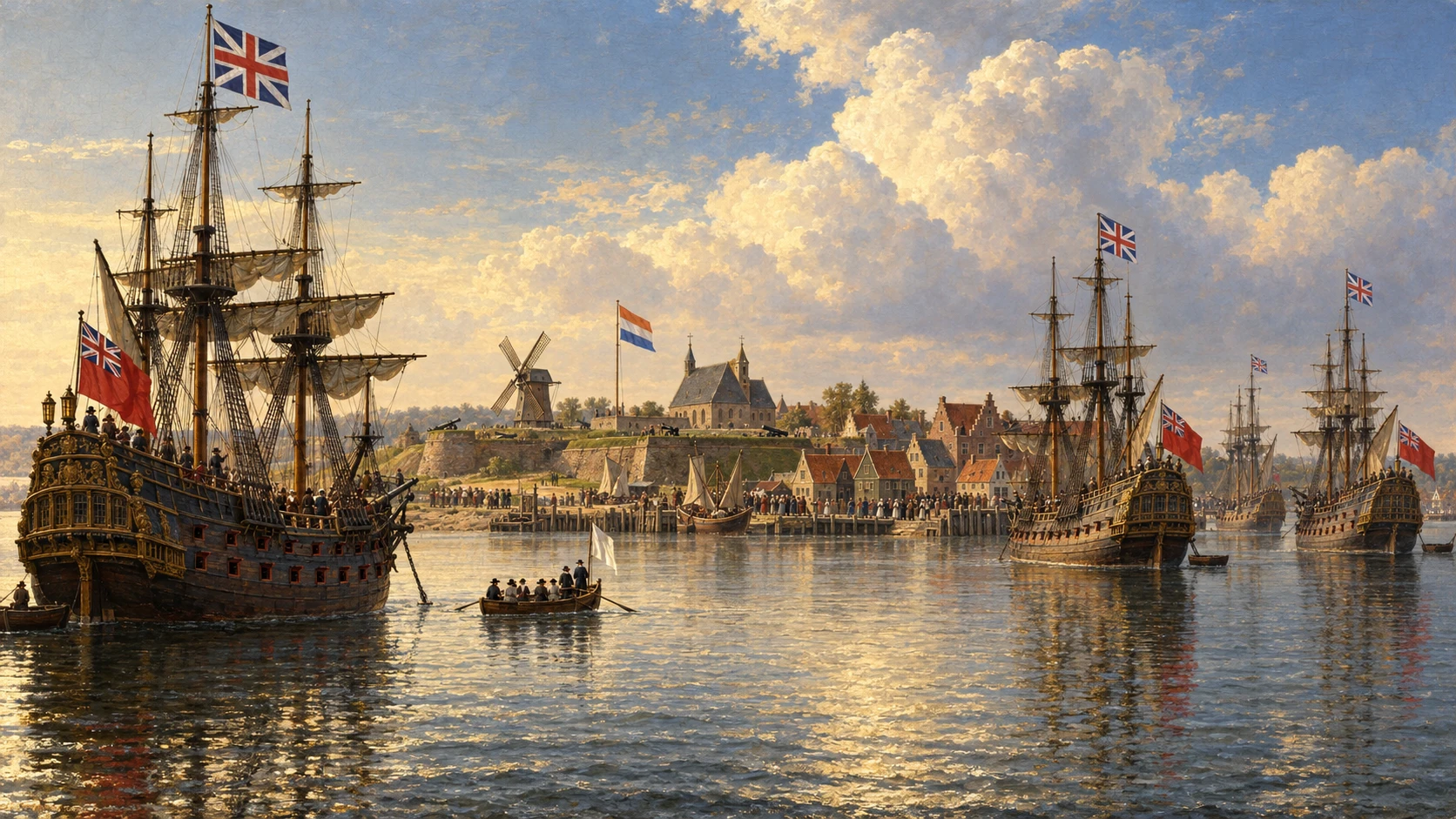
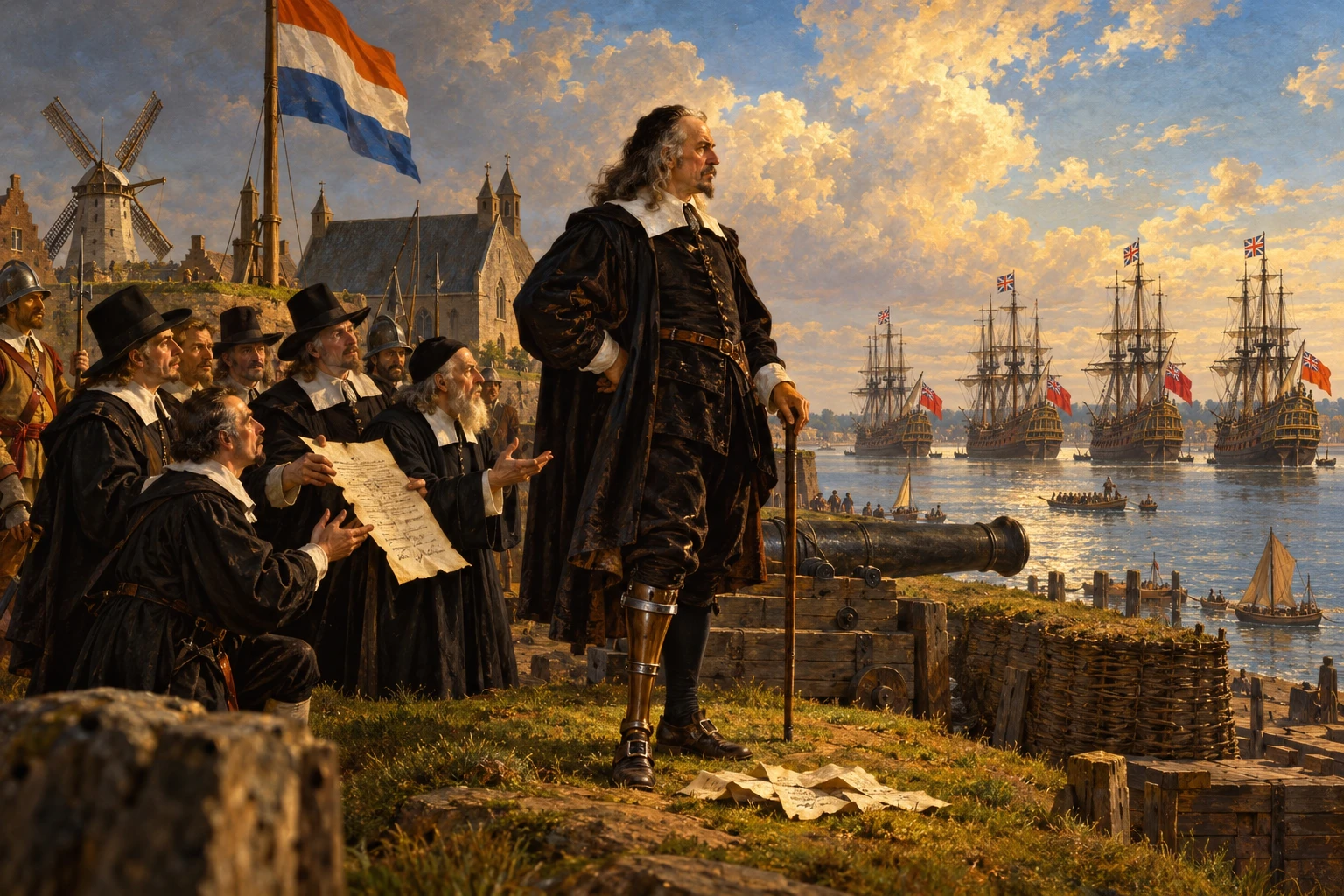
The family had been in the colony only eighteen months when, in late August 1664, English warships appeared off New Amsterdam and Director General Stuyvesant surrendered without a fight. New Netherland became New York, the property of the king’s brother, James, Duke of York. The terms of surrender let the Dutch-speaking settlers keep their land, their trade and their own Reformed church, and most, like the Merles, simply stayed.
Gideon and Marie’s last child, Anne, was born on Staten Island in 1666, the only one of their children born in America.
Constable of Staten Island
By 1671 Gideon was the island’s constable under the English governor, Francis Lovelace. A constable kept the peace, served the governor’s orders and warrants, and acted for the authorities in local business, and two records show Gideon doing exactly that:
- 26 April 1671. At a council in the fort in New York, with the governor present, “the Busynesse of Staten Island” was heard: the inhabitants’ petition was presented by Thomas Carle and Nathan Whitmore. The council ordered the Surveyor General to attend the next morning, and the order was “sent by Gideon Marlette.” The next day the council decided on new lots to be added to the Old Town and a road for driving cattle.
- 16 January 1671/72. On the death of Walraven Letin of Dover, a settlement just below the Narrows, the inventory of his estate was “taken by Gideon Marlett, Constable, in presence of Peter Belew, Simeon Corne, Tys Barenson, and many others then present.” Peter Belew is almost certainly Pierre Billiou. See the printed record.
Family research says Gideon was appointed constable at Dover on 20 April 1671. That appointment hasn’t yet been found in a published record, but these two entries show he was in office that spring and the following winter.
The Dutch come back, 1673–74
In August 1673, during a new war between England and the Dutch Republic, a Dutch fleet retook New York without much resistance and renamed it New Orange. On 13 August the people of Staten Island formally submitted to the Dutch. The new governor, Anthony Colve, needed local men he could trust, and on 14 February 1674 he appointed Gideon Marlet and Nathan Whiteman as additional magistrates for Staten Island.
A patent of that spring gives a glimpse of how well known Gideon had become. On 22 May 1674 Paulus Regrinar was granted 70 morgens on Staten Island, “on the bay, about 1 Dutch mile from Gideon Marlet’s point.” A point of land on the bay was known by Gideon’s name.
The Dutch interlude was short. The Treaty of Westminster, signed in February 1674, gave the colony back to England, and English rule returned that November. Gideon had now lived under the Dutch, the English, the Dutch again and the English again, all in eleven years.
The land at Fresh Kill
Under the new English governor, Edmund Andros, the island’s farms were surveyed and patented. The land papers in Albany record the family’s share:
| Date | Record |
|---|---|
| 18 October 1675 | Survey of about 256 acres “on the south side of Staten Island, for Gideon Marlett and sons,” by Jacques Cortelyou. The same day Cortelyou surveyed 270 acres for “Pierre Billeau and sons.” |
| 1 November 1675 | Patent to “Gideon Marlett and his two sons, Joshua and Paulus,” for 243 acres on the south side of Staten Island, “also 30 acres of salt meadow, lying at the mouth of Fresh kill.” |
| 31 March 1676 | A second survey of the 256 acres “laid out for Gideon Marlett and others,” again beside a survey of 270 acres for “Peter Biliau and others.” |
The patent was made to Gideon with his two eldest sons, Josias (written Joshua) and Paulus, then about 30 and 22. Salt meadow was valuable: its marsh hay fed cattle through the winter. The Billiou and Merlet surveys, made the same days by the same surveyor, suggest the two families were neighbors, and a map of the island’s colonial patents bears that out (below).
Finding the farm on the map
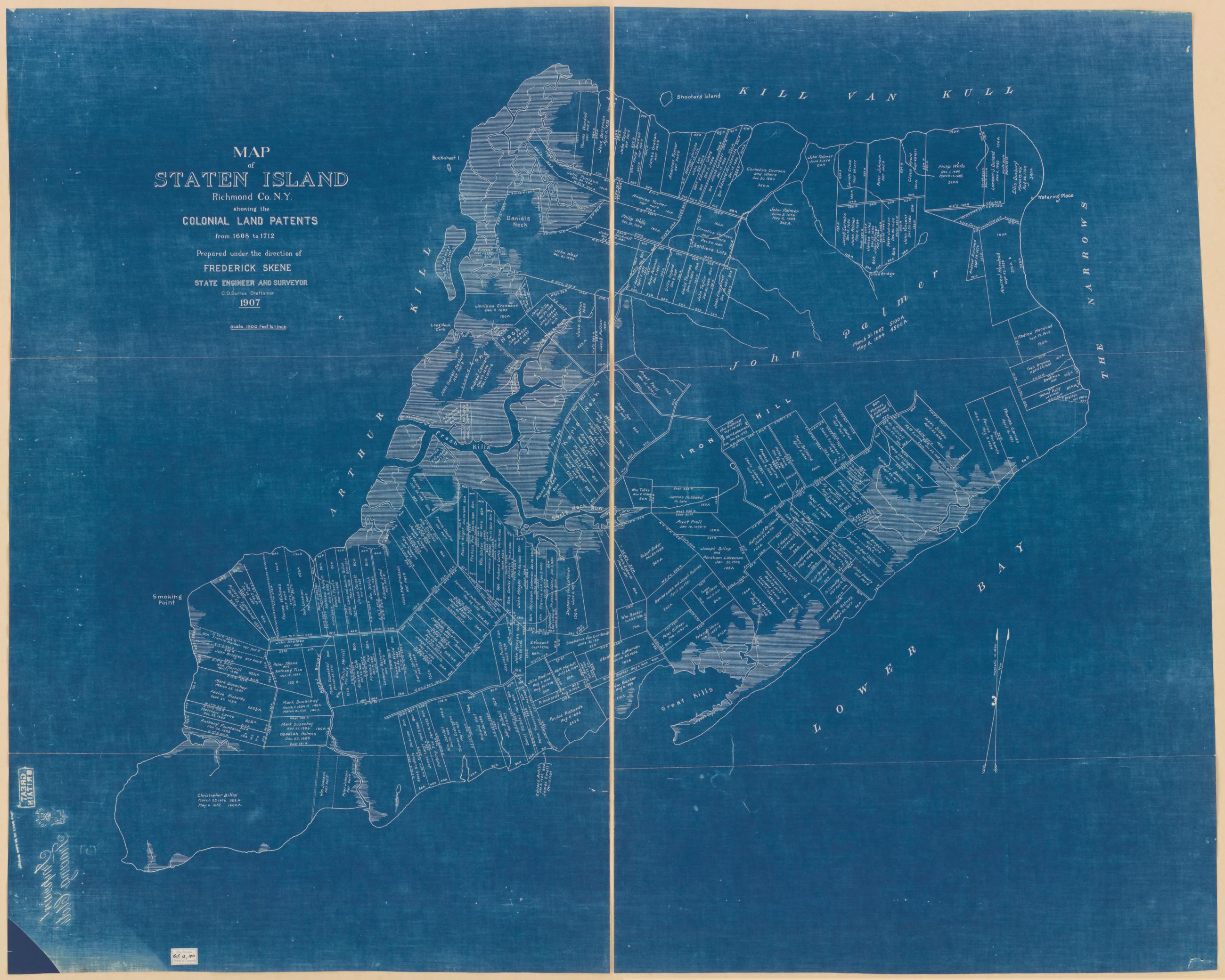
In 1907 the New York State Engineer, Frederick Skene, drew up a map of Staten Island showing every colonial land patent from 1668 to 1712, each lot marked with the patentee’s name, the date of the patent and the acreage. It makes it possible, for the first time, to see where the family’s land lay.
Three lots on the south side of the island belong to our story:
- “Abm. Marlett, July 26, 1694, 80 A.” Abraham Marlett’s own patent, inland from the head of Great Kills. His neighbors on the map are John Bodine, William Barker and Abraham Lakeman, the same names the later land papers give for the land around “Abraham Merlett” and “Barker’s farm.”
- “Paulus Richards, Aug. 4, 1694, 243 A.” The lot just below Abraham’s. It is exactly the size of the 1675 patent to Gideon and his sons Josias and Paulus, and it went to Paul Richards about three weeks after he petitioned for the meadow “formerly owned by Gideon, Joshua and Paul Marlet.” This is almost certainly Gideon’s farm, patented anew once the family had moved to New Jersey.
- “Paulus Richards, Aug. 4, 1694, 30 A.” A narrow strip of salt meadow on the north bank at the mouth of Fresh Kills: the family’s “30 acres of salt meadow, lying at the mouth of Fresh kill.”
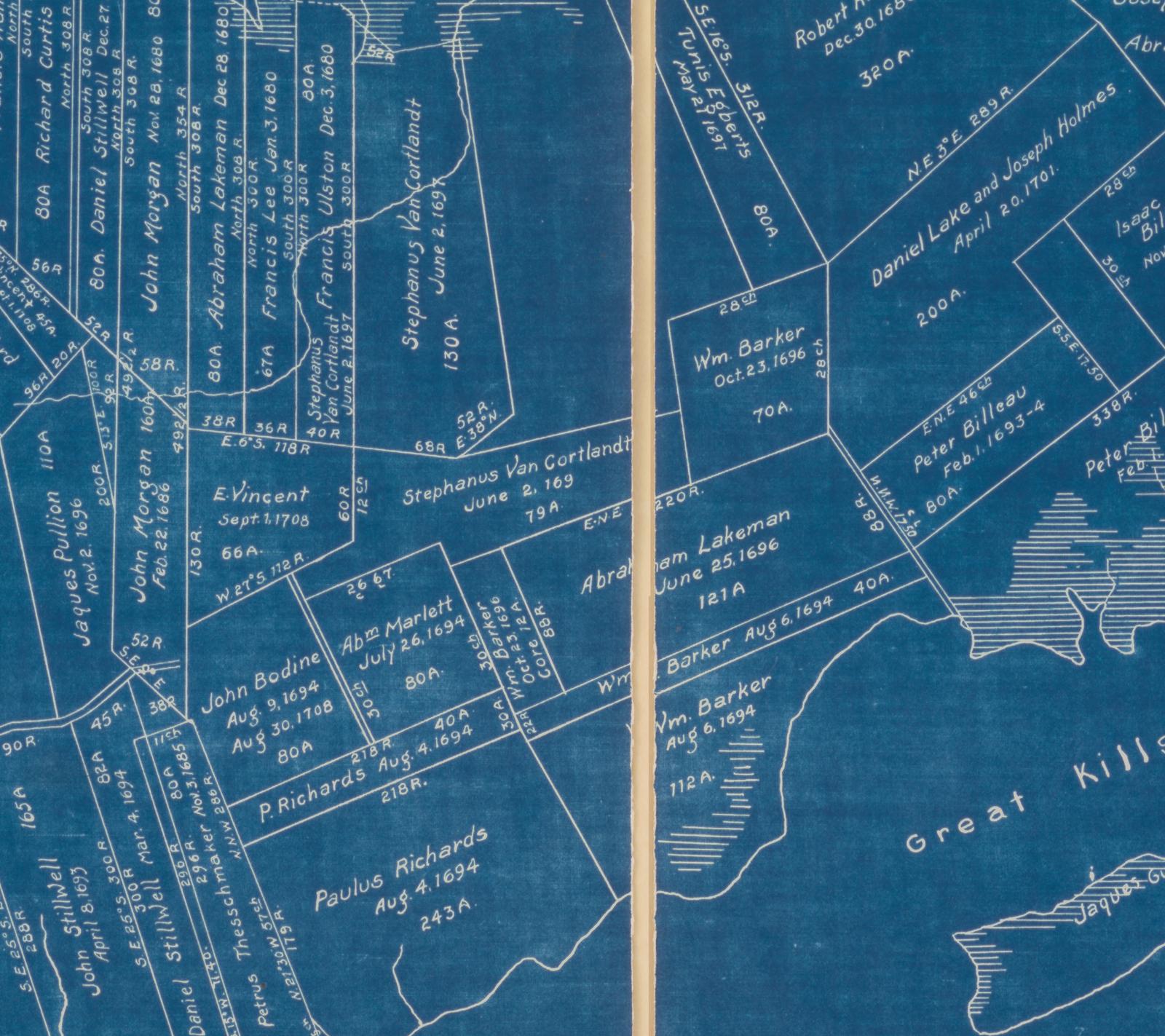
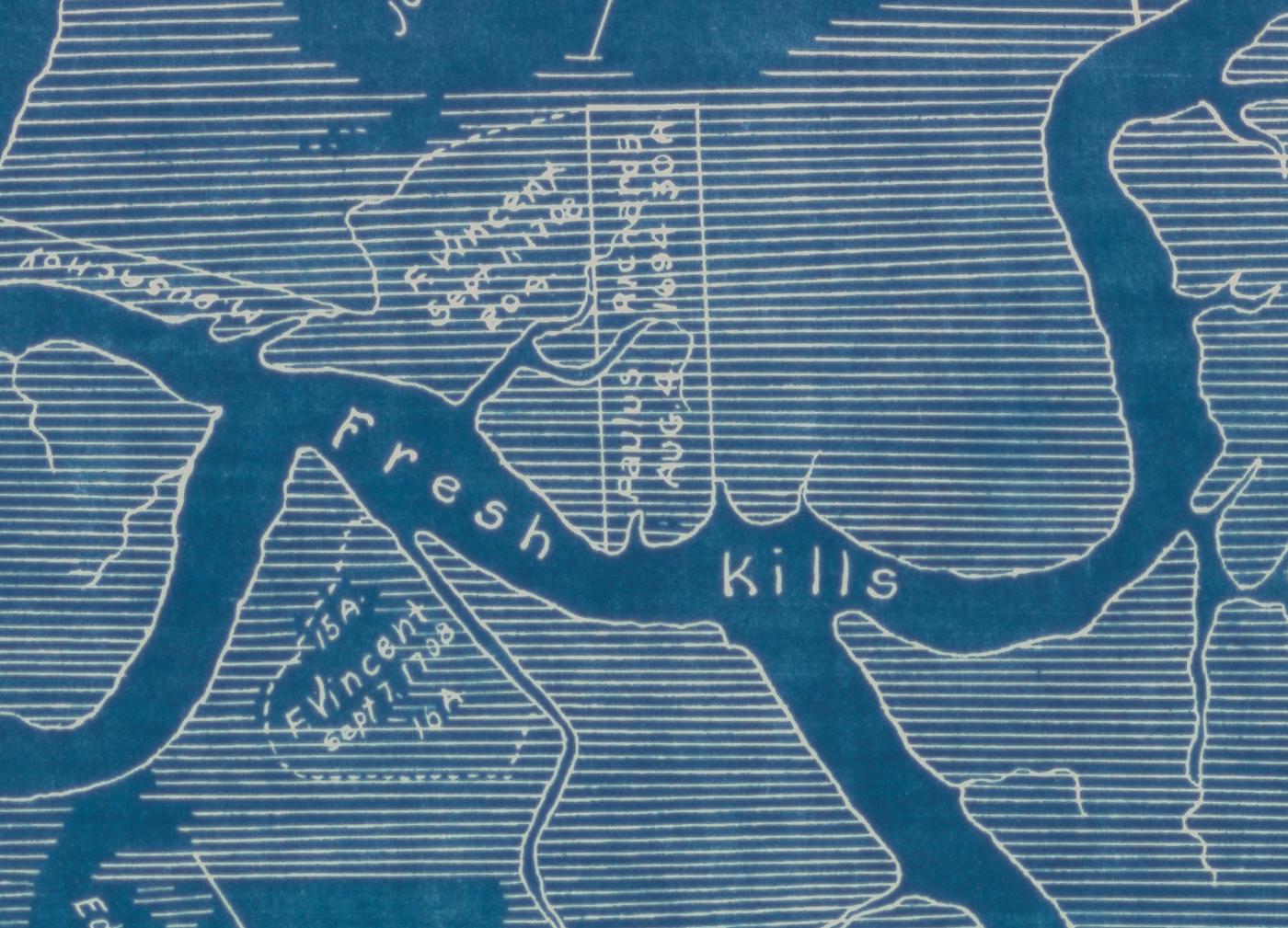
The map labels the two older lots with Paul Richards’s name, not the Marletts’, so the identification rests on the matching acreage and on his 1694 petition; but the fit is exact. The farm lay on the south shore of the island, roughly where the Great Kills and Eltingville neighborhoods are today.
The neighbors are familiar too. Just to the east lies “Peter Billeau, Feb. 1, 1693–4, 270 A.”, the same 270 acres surveyed for Pierre Billiou and his sons on the same day as the Marlett survey of 1675, which explains how Abraham came to marry Christance Billiou. Around them are other names from the family’s records: Peter Neve (1685), almost certainly the Peter Nowe to whom Gideon owed 150 guilders in 1681; Abm. Lutine (1685), of the Letin family whose estate Gideon inventoried as constable; Hans Lawrence and Edward Marshall, arrested with Paulus in 1678; the Stillwells of Dover; and, across the southwest tip of the island, the manor of Christopher Billop, whose servant girl was at the center of that case.
The next generation
By the late 1670s the boys who had crossed the Atlantic were grown men with families of their own:
- Abraham married Pierre Billiou’s daughter Christance in 1678, joining the two French-speaking families. Land papers of the 1690s and early 1700s still name Abraham Marlett as a landholder on Staten Island.
- Paulus was in trouble in January 1678, when a warrant went to the island’s constable to arrest him and five other young men, Daniel Stillwell among them, “for abducting a servant girl of Christopher Billop.” Five days later they were released from prison on bail; how the case ended is not known. In 1679 he married Lysbeth Burwyck, and their daughter Jannetje was born that year.
- Josias, the eldest, shared the patent with his father and brother; later land records name his wife as Jane or Jean.
- Jean Pierre, the youngest son, grew up on the island and later settled in Middlesex County, New Jersey, where the Mellott and Malott spellings began with him.
1681: a hard year
In 1681 “Gidion Marlett” was listed among the first settlers of Staten Island in the Richmond County records. It was also a year of loss:
- In late August 1681, Mary Marshall and Ann Marlett drowned when their canoe overturned. The record doesn’t name Ann’s parents. She may have been Gideon’s daughter Anne, who would have been about 15, but she could also have been a granddaughter.
- Marie, Gideon’s wife of 37 years, died in 1681. Family records place her death at Piscataway, New Jersey, on 25 August, the same date given for the drowning, which suggests the two events may have been confused somewhere along the way. Her death date needs a record of its own.
- On 5 December 1681 a Staten Island court ordered Gideon to pay a debt of 150 guilders to Peter Nowe.
To New Jersey
By 1684 “Marlet (Marlett-Marlott-Merlett), Gideon” was listed among the first settlers of Piscataway, across the Arthur Kill in New Jersey, where many Staten Island families were taking up land. He did not live long there. On 20 March 1684 the governor’s council granted a petition of Josias and Paulus for a survey and division of the land they had inherited, so Gideon had died by then, at about sixty. No record of his death or burial has been found.
A widow named Mary Murlet married John Tailler at Woodbridge, New Jersey, on 7 December 1685. She is thought to have been Gideon’s second wife, recorded on this site as Mary Taylor.
The family’s Staten Island meadow passed out of their hands. In July 1694 Paul Richards petitioned for a survey of thirty acres of meadow “near the mouth of Fresh Kill, on Staten island, formerly owned by Gideon, Joshua and Paul Marlet.” By then Gideon’s sons were raising families of their own in New Jersey and on Staten Island, and the spellings Marlatt, Marlett, Mellott and Malott were beginning to part ways.
Records still to find
- Gideon’s appointment as constable, said to be at Dover on 20 April 1671; Charlotte Megill Hix’s Staten Island Wills and Letters of Administration, p. 109, is the likely source.
- The 1675–76 surveys and patent themselves, whose bounds would confirm that the 243 acres re-patented to Paul Richards in 1694 were the Marlett farm (New York State Archives, Indorsed Land Papers).
- The 1681 drowning record (Abstracts of Wills, Liber 19 B, p. 427) and any record of Marie’s death, to settle whether the drowned Ann was Gideon’s daughter and when Marie died.
- Gideon’s death and burial, between December 1681 and March 1684.
Every record behind this story, in date order, is in the Timeline of Gedeon Merlet.